.svg)
The Art of the Drift: A Beginner’s Guide to Fly Fishing & Essential Gear

Understanding the Fly Fishing Discipline
Unlike conventional angling, where a heavy lure or bait pulls the running line off the reel, fly fishing is a game of pure physics and aerodynamics. Here, your offering—the “fly”—is practically weightless, meticulously tied from feathers, fur, and synthetic materials to mimic aquatic insects or small baitfish. To cast it, you rely entirely on the weight of the specialized, coated fly line to carry the fly to the target zone.
It is an active, elegant discipline that rewards patience, stealth, and a deep understanding of river entomology. Whether you are targeting trout in a rushing alpine stream or casting on a glassy lake, mastering this art offers an unparalleled connection to nature and the outdoors.
A Brief History: From British Aristocracy to JDM Streams
Fly fishing is believed to have originated in England around the 16th century, initially enjoyed as a pastime by the aristocracy. However, its integration into Japanese angling culture created a unique sub-genre. Introduced to Japan in the late 19th century by Western diplomats, fly fishing blended beautifully with Japan’s traditional native mountain stream methods, such as Tenkara.
By the 1970s, Western fly casting techniques took firm root across Japan, exploded globally after the 1992 cinematic masterpiece A River Runs Through It, and evolved into today’s dedicated community of over 100,000 Japanese fly fishers who treat the sport with a sense of zen-like craftsmanship.
The Essential Fly Fishing Gear Blueprint
To step onto the riverbank, a beginner needs to understand how the fly fishing system functions as a cohesive unit. Unlike traditional tackle rated by breaking strength, fly gear is classified by a standardized “Weight (#)” system.
1. The Fly Rod
The backbone of your setup. Fly rods are built for flexibility and progressive bending. Traditionally crafted from bamboo or fiberglass, modern anglers overwhelmingly favor Carbon Fiber due to its lightweight recovery speed and responsive feel.
- For Small Streams & Creeks: Opt for a nimble 7.0 to 8.0-foot rod rated for a #3 or #4 line. This allows for delicate presentations under tight, low-hanging branches.
- For Lakes & Large Rivers: Choose a robust 8.5 to 9.0-foot rod paired with a #6 line to battle heavy winds and throw longer distance casts.
2. The Fly Reel
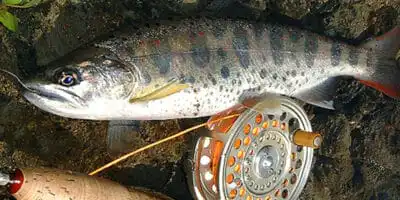
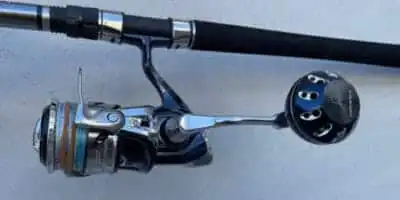
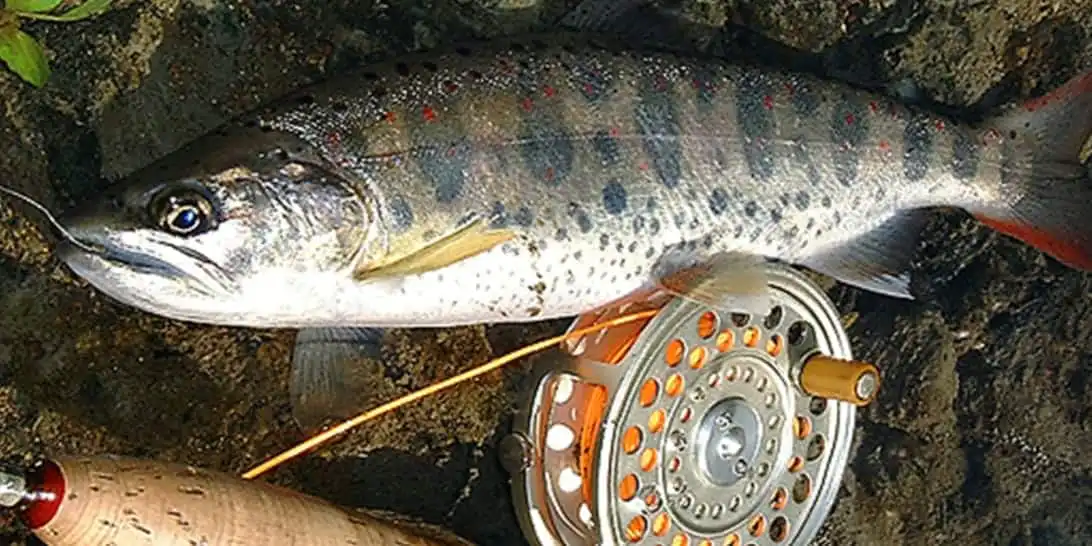
In fly fishing, the reel primarily serves as a balanced counterbalance and a line storage unit rather than a high-speed winch. It must be perfectly matched in weight to your rod. Look for a simple click-pawl or smooth disc-drag system that allows for easy left- or right-hand retrieval crossover based on your personal preference.
3. The Fly Line
The primary vector that delivers your fly. It is thick, floating or sinking, and brightly colored, categorized by weight (#3, #4, #5, etc.). Standard lengths run between 25m–30m.
There are two main types:
- Floating Line (F): The mandatory choice for beginners. It rides high on the surface tension, making it easy to track, mend, and pick up off the water.
- Sinking Line (S): Designed to cut through the water column to present flies to deep-dwelling lake trout or subsurface fish.
4. The Leader & Tippet Architecture
Because fly line is thick and highly visible, you cannot tie it directly to a cautious trout. You need a transparent connection that tapers down dynamically.
- Tapered Leader: An extruded nylon line that gradually tapers from thick (butt section) to thin, transferring the casting energy seamlessly. Beginners should start with a 7.6ft to 9ft leader.
- Tippet: A level section of ultra-thin fluorocarbon or monofilament (usually 60–70cm) tied to the end of the leader to preserve its lifespan.
- The “X” Sizing Rule: Lines are rated by an “X” system—the higher the number, the thinner the diameter. A #3 line pairs with a fine 5X tippet (approx. 0.8 JDM gauge) for stealth, while a heavy #6 line pairs with a 3X leader (approx. 1.5 JDM gauge).
THE FLY LINE SYSTEM: FROM REEL TO FLY
[ Fly Reel ] ──> [ Thick Fly Line ] ──> [ Tapered Leader ] ──> [ Fine Tippet ] ──> [ Artificial Fly ]
5. Artificial Flies (Kebari)
Tied carefully onto hooks using bird feathers, animal hair, or synthetic fibers, flies fall into two foundational categories. Beginners should start with a balanced mix:
- Dry Flies (Surface): Designed to float on the water’s surface, mimicking adult insects hatching. (Pack 10 pieces).
- Nymphs & Streamers (Subsurface): Sinking imitations that mimic underwater larvae or small baitfish. (Pack 10 pieces).
Tactical Essentials: The Ultimate Stream Accessories
While rods and lines deliver the fly, it is the tactical accessories on your vest that dictate your efficiency on the riverbank. Fly fishing demands lightweight, rustproof, and highly accessible tools for micro-rigging and ethical fish handling.
The Rigging Engine🛠️: Gomexus SharkBite Nipper & Retractor Combo
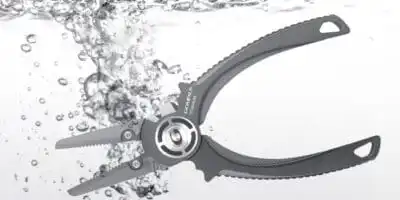
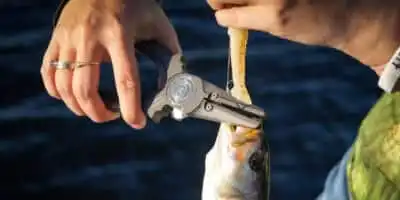
Every fly angler knotting a microscopic dry fly onto a 6X tippet needs a precision cutting tool. The Gomexus SharkBite Nipper is engineered out of premium AL6061 aerospace aluminum to replace clunky, dull clippers.
-
Surgical Cuts: Armed with razor-sharp stainless steel blades, it effortlessly cleaves through everything from heavy 85lb saltwater braids to the finest, almost-invisible fly tippets without fraying.
-
Built for the Hatch: Beyond its clean cut, it features a built-in knot-tying tool for lightning-fast rigging on the water and an essential cleaning needle to clear dried head cement from clogged hook eyes. Mounted on a heavy-duty 65g-load retractable carabiner, it stays securely on your vest for quick one-handed deployment.
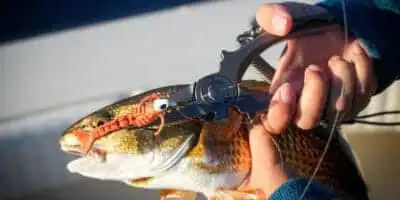
The Conservationist’s Choice🐟: Gomexus 46.5g Micro Fish Gripper
Wild trout and native stream species have delicate jaw structures and protective slime coats. Traditional heavy lip grips can cause catastrophic injury during unhooking.
-
Featherlight Control: Weighing a mere 46.5g (1.64oz) and measuring just 3.93 inches, this anodized aluminum mini gripper slips into any shirt pocket entirely unnoticed.
-
Gentle Catch & Release: Don’t let the micro-chassis fool you; it locks down with a secure 5kg (11lb) scaling grip and a wide 3cm opening. The smoothly contoured jaws ensure a confident hold for quick hook removal and gentle, stress-free releases in icy mountain streams—keeping the fish safe and your hands dry.
Final Thoughts: Respecting the Flow
Fly fishing is more than just a method to catch fish; it is an exercise in environmental conservation, mindfulness, and outdoor appreciation. By matching the hatch, perfecting your drift, and utilizing precision, trout-friendly tools, you protect both your angling experience and the fragile cold-water ecosystems for generations to come.
Ready to streamline your stream pack? Explore the [Gomexus Fly Fishing Tactical Tools Collection] today and unlock exclusive Captain Program rewards on your next blue-line adventure.